Pairing Cigars & Alcohol – Ferdinand Red Vermouth
Cigars and alcohol. Two luxury products that go hand in hand, and sometimes even meet on business level. Aging tobacco in whisky, rum, or cognac barrels is a practice several brands do to achieve extra flavour to the wrapper for certain lines. The famous bourbon brand Maker’s Mark has their own cigar, sold in tubes with the signature wax coating. Drew Estate works with Pappy van Winkle and used to make Kahlua cigars. Mombacho used to have the Diplomatico series. General Cigars works with Sazerac, which resulted in Fireball cigars, Weller by Cohiba and collaborations with Buffalo Trace. And there is the Diesel Whisky Row, a collaboration with Rabbit Hole Distilleries. Fratello Cigars also sells craft beer. Most famous are probably the Cuban collaboration between Martell Cognac and Cohiba. Dominique London, the European retailer with more than 20 shops in the UK, Belgium, Switzerland and the Canary Islands takes it one step further. They bought a distillery in Wales and produce whisky, gin, rum, vodka and liquors.
Ferdinand Red Vermouth
Vermouth is an aromatized fortified wine, flavoured with various botanicals such as roots, barks, flowers, seeds, herbs and spices. Some vermouths are coloured. The modern versions of the beverage were first produced in the mid to late 18th century in Turin, Italy. While vermouth was traditionally used for medicinal purposes, it was later served as an aperitif, with fashionable cafés in Turin serving it to guests around the clock. In the late 19th century, it became popular with bartenders as a key ingredient for cocktails.
Historically, there have been two main types of vermouth: sweet and dry. Responding to demand and competition, vermouth manufacturers have created additional styles, including extra-dry white, sweet white (blanc or bianco), red (rose), amber and rosé. Vermouth is produced by starting with a base of neutral grape wine or unfermented wine must. Each manufacturer adds additional alcohol and a proprietary mixture of dry ingredients, consisting of aromatic herbs, roots, and barks, to the base wine, base wine plus spirit, or spirit only – which may be redistilled before adding to the wine or unfermented wine must. After the wine is aromatized and fortified, the vermouth is sweetened with either cane sugar or caramelized sugar, depending on the style.
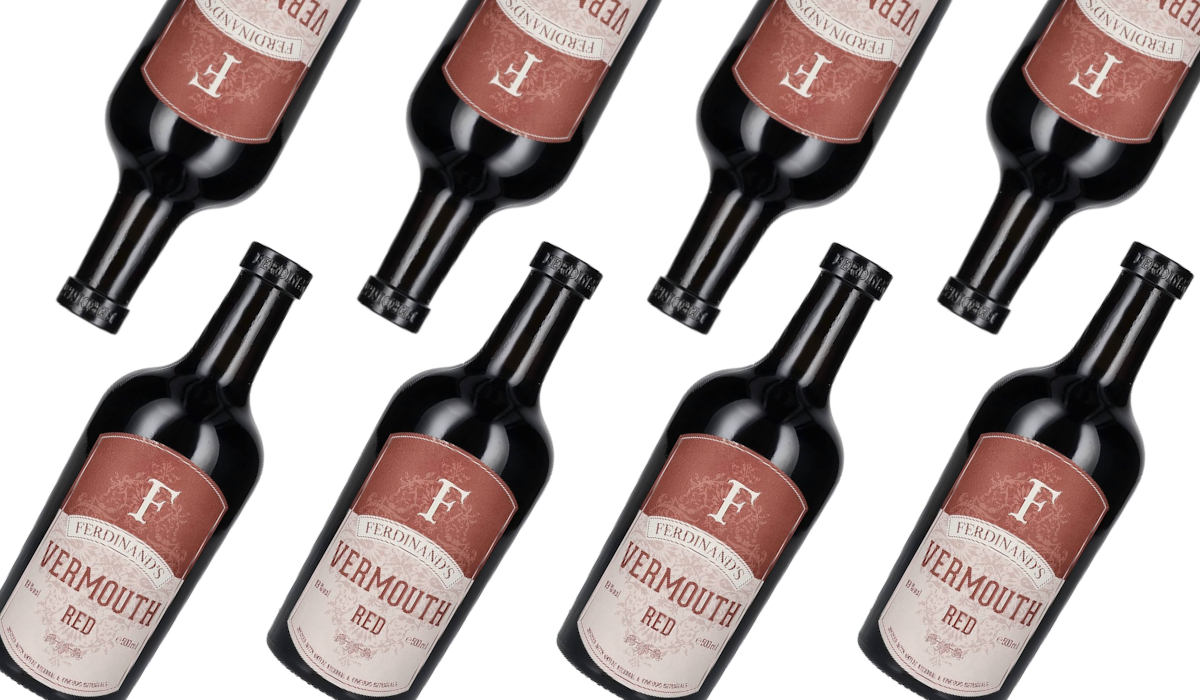
Ferdinand’s is a German distiller, best known for their Saar Dry Gin but also make vermouth, both dry, white and red. Ferdinand‘s Red Vermouth reveals itself as a relatively fruity and complex representative of its category. Green walnut gives it a special kind of bitterness and creates an extraordinary flavour in combination with native red fruits such as Stavnsbaer cherries and Schonberger plum.
Neat
I poured some in a Glencairn and I’m pleasantly surprised by the aroma. It is very fruity, red fruits. The vermouth is pleasantly sweet, with a little bitterness to gives it depth. The bitterness comes from the green walnut and it works wonders with the red fruit. It’s a quite complex. Pair this with a creamy Connecticut Shade cigar and you’ll have a perfect combination.
Vermouth & Soda
This is an old cocktail, and you can use the same recipe for Vermouth & Tonic too. But since I already did so many Gin & Tonic for this website, I used the soda version. The nose is dominated by the garnish, the lemon aroma is strong. It’s refreshing, but too watered down to my taste. The soda water dilutes the complexity and depth of red vermouth. So next time, I will add less soda than mentioned in the recipe. Don’t go with anything stronger than medium bodied, with milder flavours or it will overpower this drink.
And now for the Vermouth & Soda recipe:
2 ounces or 60ml of Red Vermouth
7 ounces or 210ml of Soda water
garnish: Lemon slice
Fill a highball with ice, pour in the vermouth and top with soda water. Stir gently and garnish with a lemon slice.
Bronx
The Bronx is an interesting historical cocktail. While it’s not as famous as its two close relatives, the Manhattan or the Martini, it does deserve a place in the cocktail hall of fame along with them, thanks to its unique balance of sweet, tart, botanical and boozy.
Like many pre-Prohibition cocktails, the origin of the Bronx is up for debate. However, this debate is less fiery than others, with the generally accepted story attributing its creation to one Johnny Solon (also spelled Solan), a bartender at the famous Astoria-Waldorf Hotel in New York. Reportedly, Solon created the drink sometime in the early 1900s, though an precise date is unknown. According to bartender legend Gary Regan, Solon named it the Bronx after visiting the Bronx Zoo, which opened in 1899.
The nose is a nice mix of orange and juniper from the Tanqueray gin that I used for this cocktail. It was the only gin I had available at my home bar. The orange mixes well with the bitterness and the red fruits of the red vermouth and the juniper of the gin. The dry vermouth makes the mouth feel a bit dry, which works really well in this cocktail. The gin also gives some heat. This is balances, sweet, mellow and complex. But smooth and therefore I would not pick a cigar with bold flavours. An Oliva Serie O Natural, RoMa Craft Wunderlust, Plasencia Cosecha 146, those kinds of cigars are great for this cocktail. Complex and flavourful cigars yet not too strong.
And now for the Bronx recipe:
2 ounces or 60ml of Gin
1 ounces or 30ml of Red Vermouth
1 ounces or 30ml of Dry Vermouth
1 ounces or 30ml of Orange juice, freshly squeezed
Garnish: orange peel
Add all ingredients minus the garnish in a cocktail shaker with ice and shake. Double strain into a coupe glass and garnish with the orange peel.
Sweet Manhattan
The Manhattan was the most famous cocktail in the world shortly after it was invented in New York City’s Manhattan Club, sometime around 1880 (as the story goes). Over the years, the whiskey classic has dipped in and out of fashion before finding its footing as one of the cornerstones of the craft cocktail renaissance. This Sweet Manhattan is a riff on the classic Manhattan.
The nose is mostly lemon with some red fruit from the vermouth. The bourbon aromas are completely overpowered. I used my last bit of Jim Beam, as I didn’t have any rye whisky. That’s why I swapped the Angostura bitters into Angostura Orange bitters, to give the cocktail a bit more flavour. This was advice I got from the experts at Liquor.com. The bourbon may not be in the nose, but it is the flavour of the cocktail, the woody aromas of the Jim Beam is a good mix with the orange bitters and the red fruit of the vermouth. I’m usually not a fan of spirit forward cocktails, but I like this. From all the red vermouth cocktails in this article, this is the one that would be able to handle a more outspoken cigar. For example, instead of the RoMa Craft Wunderlust I would pick the RoMa Craft Neanderthal Mode 5. From Oliva I would go for the G series. A West Tampa Black would be nice as well, just like a Partagas D4.
And now for the Sweet Manhattan recipe:
2 ounces or 60ml of Bourbon or Rye Whisky
1 ounces or 30ml of Red Vermouth
1/6 ounce or 5ml of syrup from a jar of Maraschino cherries
2 dashes of Angostura orange bitters
Garnish: Lemon peel and a maraschino cherry
Add all ingredients with some ice in a mixing glass, stir and strain into a cocktail glass. Garnish with the cherry and the lemon peel.
Inspector X