Pairing Cigars & Alcohol – Chateau Montifaud VSOP
Cigars and alcohol. Two luxury products that go hand in hand, and sometimes even meet on business level. Aging tobacco in whisky, rum, or cognac barrels is a practice several brands do to achieve extra flavour to the wrapper for certain lines. The famous bourbon brand Maker’s Mark has their own cigar, sold in tubes with the signature wax coating. Drew Estate works with Pappy van Winkle and used to make Kahlua cigars. Mombacho used to have the Diplomatico series but Mombacho no longer exists. General Cigars works with Sazerac, which resulted in Fireball cigars, Weller by Cohiba and collaborations with Buffalo Trace. And there is the Diesel Whisky Row, a collaboration with Rabbit Hole Distilleries. Fratello Cigars also sells craft beer. Most famous are probably the Cuban collaboration between Martell Cognac and Cohiba. Dominique London, the European retailer with more than 20 shops in the UK, Belgium, Switzerland and the Canary Islands takes it one step further. They bought a distillery in Wales and produce whisky, gin, rum, vodka and liquors.
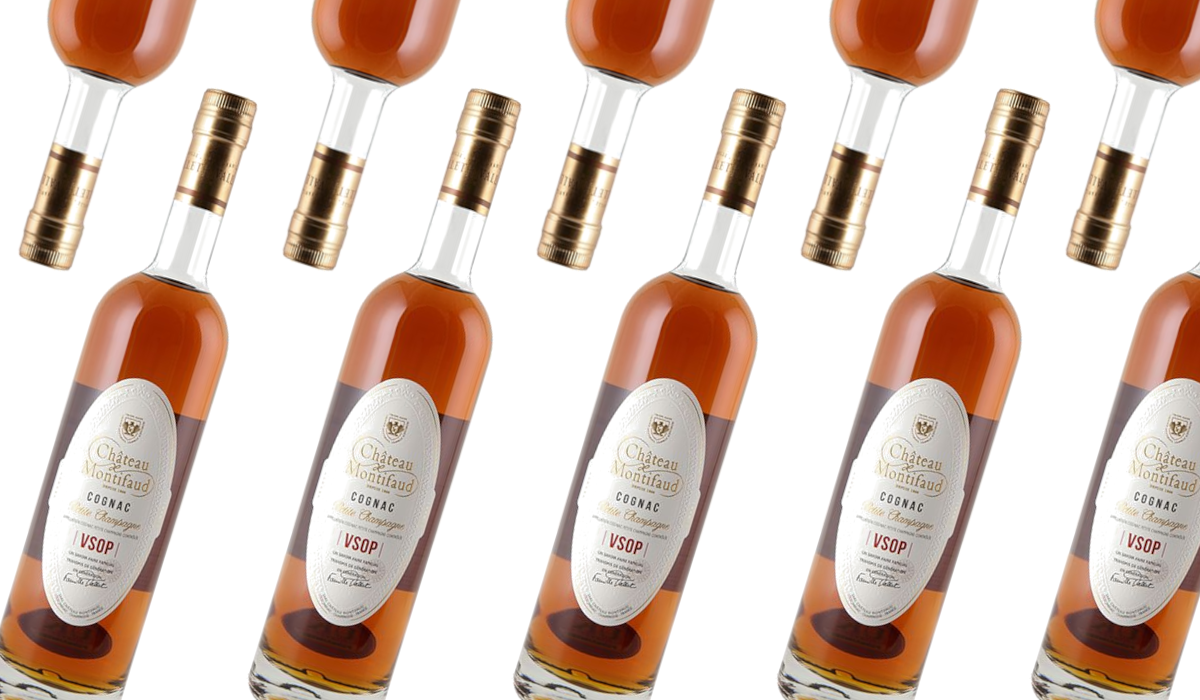
Chateau Montifaud VSOP
Cognac is a variety of brandy named after the commune of Cognac, France. It is produced in the surrounding wine-growing region in the departments of Charente and Charente-Maritime.
Cognac production falls under French appellation d’origine contrôlée (AOC) designation, with production methods and naming required to meet certain legal requirements. Among the specified grapes, Ugni blanc, known locally as Saint-Émilion, is most widely used. The brandy must be twice distilled in copper pot stills and aged at least two years in French oak barrels from Limousin or Tronçais. Cognac matures in the same way as whiskies and wines barrel-age, and most cognacs spend considerably longer “on the wood” than the minimum legal requirement.
The wines for the Chateau de Montifaud VSOP Cognac have been made exclusively from Ugni Blanc grapes and stored on the lees for 2-3 months before distillation to create a superb, bold character full of grapevine and fruit flavours. New oak casks are used for the first year of maturation, after which the eaux-de-vie are transferred into old oak (4-15 years old) for the remaining ageing time. The total process can take up to ten years – much longer than the four-year minimum required for a VSOP. With such an extraordinary suppleness and delicacy on the palate complemented by sweet hints of pear and apricot, we say this Cognac is worth the wait. The Vallet family have been the guardians of Château de Montifaud Cognac for six generations and are today responsible for 125 hectares of vineyards across the Grande and Petite Champagne regions. Specializing in traditional production methods, the family chooses to distil only Ugni Blanc grapes and always aim to age their Cognacs significantly longer than required by law.
Neat
A cognac expert, a brand ambassador for Martell cognac, taught me that drinking cognac from a Glencairn is actually better than from the classic cocktail glass. When I did not believe him, we tried it with several different cognacs and I had to admit, he was right. So I’m trying this cognac in a Glencairn.
On the nose this cognac gives delicate flower notes and apricot fruit. The cognac is smooth with a delicate flavour. The apricots that are in the nose are in the flavour too, with pears and almonds. Delicate and complex. The finish is long, very long and there is no bite of the alcohol at all. This will go well with a medium bodied, smooth cigar. Something like a Maestranza Baron, a Daniel Marshall red label in a smaller ring gauge, Alec Bradley Coyol Petit Lancero or a nice Montecristo #4.
French Connection
The following text comes from the website liquor.com: The French Connection is a two-part drink that first appeared in the early 1970s and was titled for the 1971 Gene Hackman film of the same name. The cocktail’s creator is unknown, so it’s unclear who to thank for this tasty concoction.
The French Connection combines cognac and amaretto—a sweet Italian liqueur made from almonds and stone-fruit pits—in an ostensibly simple duo that tastes more complex than the recipe indicates. Cognac provides a bright and fruity base that harmonizes seamlessly with the amaretto liqueur’s trademark fruit and almond notes. There are no rules when choosing your cognac, and the drink can be made with a young VS, a slightly older VSOP or even an XO. Younger cognacs supply fresher and more fruit-forward flavours, while the older expressions bring oak barrel accents like vanilla and spice.
The French Connection is similar to the Godfather, another ’70s cocktail named for a famous film. The only difference is the base spirit. Instead of cognac, the Godfather enlists whiskey—usually scotch, but occasionally bourbon. Both cocktails became popular after-dinner drinks upon their debuts, offering the one-two punch of strong spirit with sweet liqueur that tastes particularly good after a meal.
It is not surprising that the nose is dominated by the sweet and beautiful smell of the Amaretto. It smells like almonds, even though Amaretto Disaronno is made with apricot kernels. The cognac gives the amaretto depth, while the sweet almond flavour dominates the taste. The cognac apple and apricot flavours come in second and remain in the finish. This cognac is too delicate for this cocktail, but with a stronger, bolder cognac, this will be a cocktail that’s going to end up on my list of favourites. The concoction has quite some viscosity and coats the palate. Pair this with a medium bodied cigar to get the perfect combination. A smooth EPC New Wave Belicoso, Oliva Serie O Robusto, Juan Lopez from Cuba, something in that style.
And now for the French Connection recipe:
1½ ounce or 45ml of Cognac
1 ounce or 30ml of Amaretto
Fill a rock glass with ice, add the spirits and stir briefly to mix
The Original Sazerac
New Orleans is famous for many things: Mardi Gras, beignets, gumbo, the Superdome. But perhaps nothing is more famous among drinks aficionados than the Sazerac, a classic cocktail consisting of rye whiskey, absinthe, sugar and bitters. The exact birthdate of the cocktail is elusive, and purported to be anytime between the 1830s and the late-1800s. For decades, the Sazerac was primarily a New Orleans drink, and even today, it’s regarded as the official cocktail of Louisiana. But it has proliferated during the modern cocktail era, and now it can be found in bars all over the world.
Many believe that the first Sazerac called for cognac, a spirit that was prevalent in French-influenced New Orleans during the 1800s. A cognac called Sazerac-de-Forge-et-Fils was served at the original Sazerac Coffee House, and Antoine Peychaud (inventor of the cocktail’s necessary Peychaud’s bitters) was known to enjoy combining his bitters with French brandy.
The liquorice and herbal aromas of the absinthe dominate the nose even though I only rinsed the glass with it. The cocktail is odd, I can taste the cognac, I can taste the Peychaud bitters, the liquorice of the absinthe is there but with a nice extra sweetness. It’s pleasant, balanced and nothing like I expected. It feels stronger than the neat cognac, yet the abv must be lower. I would pair this with either a sweet yet strong maduro cigar or a spicy Cameroon wrapper. A RoMa Craft Baka or Oliva Serie G, a Tatuaje Mexican Experiment or a simple Macanudo Maduro Diplomat. For a Cuban, I’d try a Bolivar Gold Medal or a Partagas Serie D No.2.
And now for Sazerac recipe:
2 ounces or 60ml of Cognac
½ ounce or 15ml of Simple Syrup
3 dashes of Peychaud bitters
Absinthe to rinse the glass
Garnish: lemon peel
Rinse a rocks glass with the absinthe and add crushed ice to chill the glass. Add the cognac, syrup and bitters in a mixing glass with a big rock of ice. Stir to chill. Empty the rocks glass, then strain the chilled cocktail into the rocks glass over fresh ice. Garnish with the lemon peel.
Inspector X