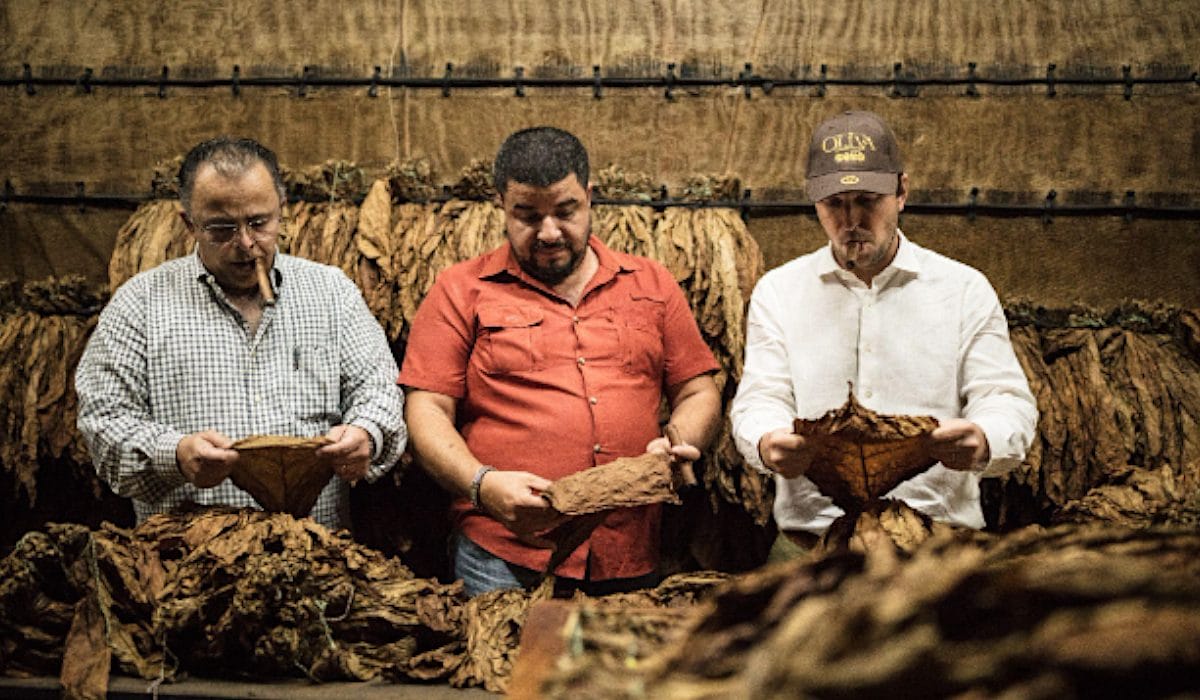
The Vandermarliere Family and Oliva Cigars: An In-Depth Interview With Fred Vandermarliere
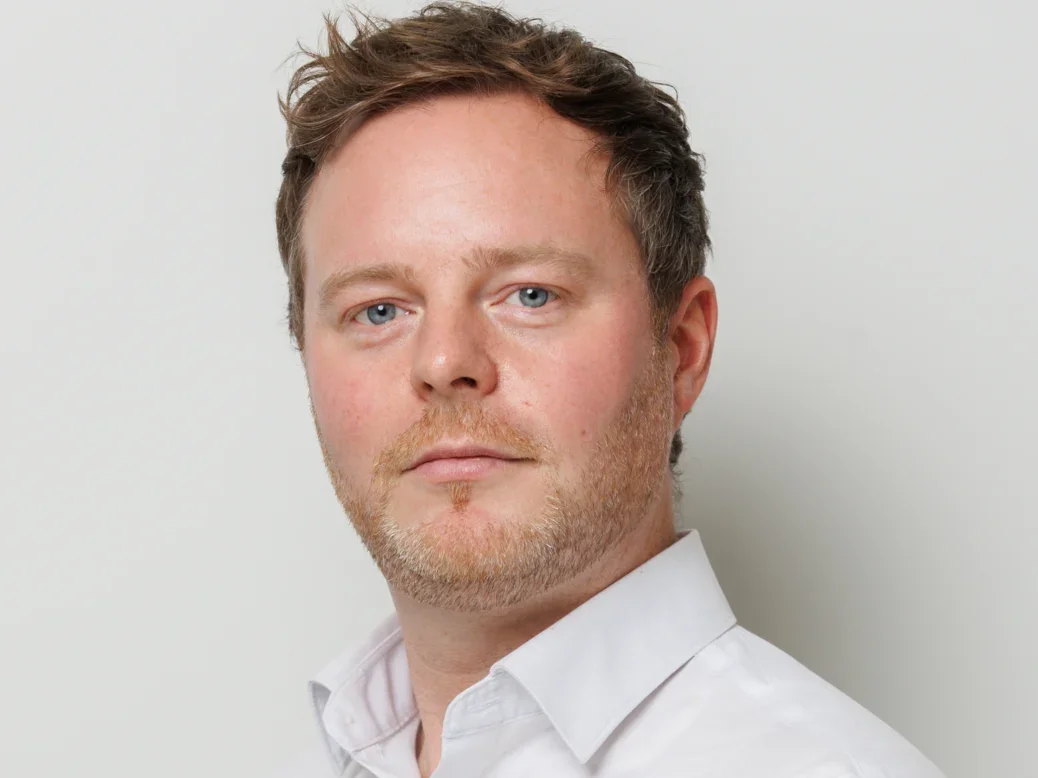
The Vandermarliere family has been a respected name in the tobacco industry for almost a century. The company was founded in 1926 in an attic in Belgium. Today’s interview is with Frederik (Fred) Vandermarliere, who is the 3rd generation of his family to take over the business. Fred took the company to a higher level by introducing the Oliva family into their company. Today, you can’t walk into a cigar shop without finding Cortès short filler cigars or long fillers from Oliva or NUB.
Humble Beginnings
Can you tell me the story about how your family got into the tobacco industry?
It all started in 1926 in a little attic in Moen, Belgium. Maurits Vandermarliere, the grandfather of Frederik, began making cigars above his cigar shop. When demand rose, he moved from the attic to a small cigar factory located in Heestert, Belgium. Back then, the company was named Ets. Vandermarliere NV. Four of his sons and one son-in-law joined the company. In 1965, Maurits’ youngest son, Guido, also joined the company and took the business to the next level. The company kept expanding, and two key moments were when they bought Neos Cigars in 1975 and TAF in 1979. With the purchase of these two companies, the family adopted the brand J. Cortès, and production numbers skyrocketed. Guido guided the company into a new era when they opened their own factory in Sri Lanka in 1986. After opening the factory, the headquarters moved to a new site in Zwevegem, Belgium, and the future was bright for the company. By then, they already had 2000 employees, and their cigars were available in 80 different countries.
In 2005, Fred Vandermarliere, son of Guido, joined the Cortès company. Just like his dad, Fred runs the company with great passion, and he opened the door to premium long fillers when they took over the Oliva brand in 2016.

For the people who haven’t heard of you, can you tell me who you are and how you ended up being CEO of the company?
I was born on a tobacco leaf. Our family has been in the tobacco business for quite some time, so I naturally grew up with these products. Thanks to my father, I had a great tutor to educate me about the company and tobacco. When I joined the company in 2005, it was already a very good company, and I slowly took things over from my dad.
Am I right to say that you took the company to the next level when you introduced the Oliva family into the portfolio of the company?
Well, nothing happens suddenly. I am a big fan of taking the crazy out of stories. Every story has its history, and it needs time to form. So, first things first, I am really grateful to the previous two generations of Vandermarliere because without them, I wouldn’t be able to start my story.
Besides that, I had the opportunity to work my way slowly into the cigar industry. I got to know some interesting figures in the industry within European borders who were all friends with my dad and family. Twenty years ago, the cigar industry wasn’t as big as it is now, but the people active in the industry had a good relationship with our family. The previous generations of Vandermarliere had built our company and assured good relationships within Europe.
Back then, you mostly found short filler cigars in Europe because they were simply more popular than long fillers. But my interest went beyond short fillers. In an earlier chapter, talking about the nineties, we already tried to make long filler cigars, but this adventure failed. I analyzed the mistakes that were made so that I wouldn’t make them again. I went on a search together with a tobacco salesman, and we visited cigar factories all over Central America. We went to Honduras, Nicaragua, the Dominican Republic—anywhere you name it, we went there. I find it very important to meet people in real life so that I can feel if the match is there, and I had a match with a few families, including the Oliva family.
Oliva and Vandermarliere
In 2016, the Vandermarliere company took over the Oliva family. Can you tell me more about how this went down?
The match was there between both sides, and I felt like we were equally passionate about cigars and tobacco. We both loved our products. Initially, we were going to make one cigar together with the Oliva family, which we would distribute in Europe, and they would distribute the cigar in America. Why? Well, we could help them grow into the European market, and they would help us get better known in the long filler industry.
One of our agreements was to keep us up to date if there would ever be a change in ownership. This was important to us because if the company was taken over, we needed to see if we were still a match with the new owners. Eventually, the family called us with bad news—the project wouldn’t happen because they decided to sell their business. We were very disappointed to hear this news. But then we flipped the coin. I talked with my father, and we were like, come on, let’s go for it.
The plan was to take over the Oliva company ourselves, and it failed the first time because they had received a higher bid than ours. Luckily for us, the Oliva family and the other bidder didn’t match up, and I took my phone and called them. Their response was, come on Fred, make a better offer, and who knows, maybe you’ll have a chance. And we did it, and then a roller coaster of 5-7 years followed after that.
I always say I am the third painting on the wall. That is who I am, and this is my responsibility. So, I decided to roll the dice and continue with this adventure.

The Company Today
Do you have any idea how big your company is at this moment?
The company today has gotten very big. We always say we have more than 5000 employees working for us. The real number is higher than that, but we try to stay humble. Talking about numbers of cigars, we don’t feel quite comfortable telling you the exact numbers, but let’s say that we have a fair share of produced long filler cigars.
The Legendary Oliva V Melanio
In 2014, the Oliva V Melanio double figurado received the award for the world’s best cigar. The top 25 that Cigar Aficionado releases each year is a very important event for many cigar producers. What impact did this event have on your company?
If your cigar becomes number 1, a sellout of stock is almost guaranteed. In 2014, Cigar Aficionado rewarded this Oliva V Melanio with a score of 94 out of 100. To be honest, we took over the company in 2016. So, the real honor of cigar of the year belongs to the Oliva family. The cigar of the year still has a big impact on the company that wins this award. That cigar, especially in the US, gets ordered in huge quantities. The most difficult aspect of the cigar of the year is that you know it will be impossible to comply with the demand for that cigar. The problem with cigars is that it’s more difficult than just pressing a button. Making a cigar demands time, and the most difficult thing is to keep the cigar of the year alive after you sell out all of your stock. The Oliva family did a good job with this, but we definitely did too.
To keep this specific cigar “alive,” we need to ensure that we still produce top-quality tobacco and top-quality cigars to deliver the V Melanio Figurados to the market as people know them. We pour a lot of effort into this because, with tobacco, it is extremely difficult to get the same result flavor-wise. If you compare wine to tobacco, you can see why this is so difficult. With wine, you get the same result because the grapes grow back each year on the same plant that has been standing there for decades. With tobacco, you need to plant a new plant every single year.
To get the same result as in 2014, you need to make sure that the seeds are taken care of but also that you keep your soil in top condition. We invested a lot in this process to make sure that the flavor of the number 1 cigar in 2014 is the same as the ones that we make today.

Which tobacco valleys do you use to make an Oliva cigar? Nicaragua offers a lot of different premium areas to grow tobacco. Do you use one specific region to grow your tobacco?
No, absolutely not. Most of the time, we make a blend that comes out of different valleys in Nicaragua. In some specific cases, we also use tobacco that has another origin than Nicaragua. Some of the wrappers we use come from Ecuador, and others from Cameroon, and so on.
Why? I firmly believe that you can make a Nicaraguan Puro that’s great, but you are limited in your options with this. By using tobacco that comes from other countries, a door opens, and you can make unique blends.
Within Nicaragua, we have our own fields in the three major regions: Condega, Jalapa, and Estelí. The tobacco we use the least is from Estelí, but we love to use Condega and Jalapa! Estelí produces top-quality tobacco, but if you compare this region with the other two, you will see that the soil in Estelí is very heavy and rich, producing stronger flavors in tobacco. But this region is more difficult to cultivate than the other two. The Condega region lies literally between Jalapa and Estelí. Also, in terms of soil, we love working with tobacco from this region, especially in combination with the other two regions! Blending with tobacco from this region is almost a guaranteed success. The last region within Nicaragua that we grow our tobacco in is the Jalapa region. Jalapa has very sandy soil, and the tobacco that comes from this region has a very soft taste to it. We have a few top farms in Jalapa that produce top-notch quality tobacco, so we are very happy with this region!
How long do you let your tobacco leaves ferment for? Are you in favour of priming leaves for up to 2-3 years?
Well, I won’t say how long we let our leaves ferment for, but the beautiful thing about cigars is just that. We won’t exaggerate with fermentation like some brands, but I like to play around and experiment with priming leaves. We prefer to give our leaves more than enough time to ferment rather than rush the process and end up with an under-fermented tobacco leaf.
I always say, you can’t rush time. Is it bad to do priming for 2-4 years? No, but you need to make sure that you don’t burn the leaves. The danger in letting your leaves ferment too long is that they can get too much aroma and power. It’s a very delicate process, and I am glad you asked me this question because this process is one of the most crucial parts of making a cigar.
How do you feel about aging cigars? A lot of people, including myself, like to age cigars before smoking them. What are the best conditions to do this? What are your thoughts on this topic?
I may not be the best person to talk about the perfect settings regarding temperature and humidity because this can vary for some people. Our cigars get a first aging process of between 3 and 6 months. What I like in this stage is that the cigars are bundled together. I am a big believer in the settling process. We did a lot of effort in sorting the tobacco and giving it the right way to ferment, and now, when you have a finished cigar, the taste needs to settle in. A cigar consists of more than one type of tobacco. Each leaf has its own flavor, and that is why it’s important to age your cigar in the beginning so that all these tastes can blend together. It only seems logical that this process needs time. I find it mandatory that I, as a manufacturer, can ensure a cigar that is perfectly blended together. In our rooms, the cigars are bundled together, and this is important because the cigars have an impact on each other during this first aging process.
After the cigars are packed, aging won’t make a cigar bad. What will happen when you age at home? A bad cigar (under-aged) will become a bit better. Under-aged cigars will taste less like ammonia after 10 years of aging, but still, it won’t be a very good cigar. But there is a difference in cigars to age. We experiment with this. We have cigars that have been aging for 6 years and up, and what I find is that a strong cigar with a powerful Ligero leaf gets more pleasant to smoke. A light cigar with a Connecticut wrapper and lighter blend doesn’t need additional aging for me. It is ready to smoke as it is.
There is a lot of competition in New World cigars. What sets the Oliva portfolio apart from other brands?
For me, we are a family business that is in the game for the long run. What sets us apart is that we choose to have a smaller portfolio of cigars. We find it more important to have a small but good quality portfolio than to come out every year with something new that isn’t perfected yet. This is a good and a bad thing, but this is what the Oliva family and our family stand for. We release new cigars after they are good enough for our standard. We focus on quality every step of the process.

Final Thoughts
For me, Oliva is a brand that never disappoints. They have been my go-to cigars for quite some years now, and they always taste and draw perfectly. The price of Oliva is another reason why the brand is so popular; they remain under 15 euros (except the V Melanio). Okay, it’s true, the brand doesn’t have a lot of different cigars, but this doesn’t bother me at all. They have a range from mild to full-bodied cigars. And like Fred said, their cigars carry a lot of quality with them. As a Belgian myself, I can only be proud that a nice guy like Frederik represents Belgium on the global cigar market.