Tobacco in Thailand: Inside the Kingdom’s State-Controlled Tobacco Industry
Asia stands as one of the oldest and most diverse tobacco-producing regions in the world. From China’s vast state-run plantations to Indonesia’s rich legacy of hand-rolled kreteks, and from India’s sun-dried leaf to Turkey’s world-famous Oriental varieties, the continent’s influence on the global tobacco trade runs deep and wide.
This new Cigar Inspector series explores the key tobacco-growing nations of China, India, Indonesia, Papua New Guinea, the Philippines, Thailand, Turkey, and Vietnam, tracing how geography, culture, and craftsmanship shape their distinct tobacco identities.
Each article will examine the evolution of these industries — from traditional curing barns to modern mechanised operations — highlighting the balance between heritage and innovation. Readers will gain insight into the unique leaf characteristics, production systems, and market dynamics that make Asia an essential, if often underappreciated, pillar of the global tobacco landscape.
Tobacco in Thailand: Inside the Kingdom’s State-Controlled Tobacco Industry
Thailand’s tobacco sector is one of the most tightly controlled in the world. The state-owned system dominates every stage of production, from cultivation to distribution. For cigar enthusiasts, this means that only legally imported cigars meet international quality and authenticity standards.
Overview & Historical Context
Tobacco first arrived in Siam during the late 17th century through European traders. The crop spread quickly across the fertile northern plains, where local farmers learned to grow and cure the leaf for domestic use.
In April 1939, the government established the Thailand Tobacco Monopoly (TTM) to centralise tobacco procurement and production. This system unified control of every step—from the purchase of raw leaf to the manufacture of finished cigarettes. Around 15,000 farming households supplied tobacco grown on 80,000–90,000 rai (about 12,800–14,400 hectares).
In 2018, the monopoly evolved into the Tobacco Authority of Thailand (TOAT), a corporatised state enterprise. Despite this change, the state retained full control over cultivation, pricing, and distribution.
By 2022, Thailand’s unmanufactured tobacco output reached 66,500 metric tons, an increase of 11.6 percent since 2010. This achievement placed Thailand 14th among the world’s tobacco producers.
Key Tobacco Growing Regions
Tobacco cultivation is concentrated in the northern and northeastern provinces, which account for around 80 percent of national production. The leading provinces are Phetchabun, Sukhothai, Phrae, Roi Et, Nakhon Phanom, Nong Khai, and Phayao.
These areas benefit from warm tropical climates and well-drained soils. The growing season begins in November, with harvests taking place from March to May. This consistent climate provides ideal conditions for the country’s main tobacco types—Burley and Virginia.
The state assigns quotas to each province, matching production levels with demand from TOAT’s cigarette factories. Farmers operate under close supervision, with strict guidelines on seed varieties, curing techniques, and delivery schedules.
Main Tobacco Types & Characteristics
Burley Tobacco
Burley dominates Thai tobacco cultivation, accounting for about 55 percent of national output. Farmers air-cure the leaf in ventilated barns for four to eight weeks. The result is a low-sugar, high-nicotine tobacco suited for cigarette fillers.
Virginia Tobacco
Virginia leaf makes up roughly 25–30 percent of the national crop. It undergoes flue-curing, a controlled heating process that enhances its natural sweetness and golden hue. The cured leaves are used for the bright, mild blends common in Thai cigarettes.
Turkish (Oriental) Tobacco
Turkish or Oriental leaf represents about 15–20 percent of national production. Farmers sun-cure it on mats, allowing natural light to create its aromatic, low-nicotine profile.
Together, these three varieties define Thailand’s domestic cigarette blends. None are cultivated for premium cigar use.
Production System & Regulation
The Tobacco Authority of Thailand controls every stage of production. Farmers must sell their entire harvest to TOAT at regulated prices. The authority processes and manufactures all cigarettes sold domestically.
Regulation is defined by two key laws:
- Tobacco Products Control Act B.E. 2560 (2017) – Requires manufacturers and importers to disclose ingredients to the Ministry of Public Health.
- Tobacco Products Control Act B.E. 2535 (1992) – Governs packaging, advertising, and health warnings.
Thailand’s regulatory system limits competition but ensures consistency. It also provides clear rules for importers of legal tobacco and cigars, maintaining high standards for retail distribution.
Role in Global Trade
Thailand’s tobacco industry focuses almost entirely on domestic cigarette production, yet the country plays a modest role in global trade.
In 2023, Thailand exported raw tobacco worth US $46.8 million, ranking 36th among global exporters. These exports mainly serve bulk cigarette producers in neighbouring Asian markets.
Despite its export presence, Thailand does not produce cigar-grade tobacco. Its leaf quality and curing methods cater to cigarette manufacturing, not the premium cigar segment.
Cigar-Specific and Unique Market Features
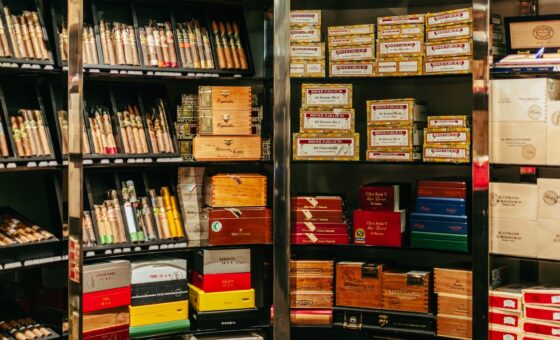
Thailand’s premium cigar market depends entirely on legal imports. The country produces no wrapper, binder, or filler leaf suitable for high-end cigars. No domestic cigar factories exist to rival those in Cuba, Nicaragua, or the Dominican Republic. However, there is a one-man operation who makes Longfiller cigars from Thai tobacco. Inspector X was pleasantly surprised with the quality.
This makes the Thai market unique. Enthusiasts seeking authentic, high-quality cigars must rely on authorised importers who meet government standards. These importers operate under TOAT supervision and must adhere to strict import licensing rules.
Exclusive cigar lounges such as the MOAT Cigar Club and other private establishments in Bangkok showcase the growing demand for premium cigars. Yet, every cigar sold must originate from verified legal channels. This ensures authenticity and compliance with Thai law.
Current Challenges & Future Outlook
The Thai tobacco industry faces multiple challenges. Farmers struggle with declining soil fertility and increasing acidity caused by continuous tobacco planting. Essential nutrients such as potassium and magnesium are depleted, reducing yield and quality.
In recent years, the government has reduced tobacco quotas due to shrinking domestic demand. Production fell from 22.6 million kg in 2007–08 to about 13 million kg in 2022–23. Farmers report lower incomes and growing uncertainty about the future.
Strong anti-smoking policies and frequent excise tax hikes further reduce consumption. The Tobacco Authority is now exploring diversification and efficiency measures, including alternative crops and improved curing technology.
The long-term outlook for Thai tobacco depends on balancing economic stability with sustainability. As the domestic cigarette market contracts, the role of legal imports—particularly premium cigars—will likely expand. For cigar lovers, this shift could enhance the availability of authentic, high-quality products through legitimate distributors.
Fast Facts Table
| Metric | Data | Source |
| Unmanufactured Tobacco Output (2022) | 66,500 metric tons | Global Action to End Smoking |
| Global Output Rank (2022) | 14th | Global Action to End Smoking |
| Cultivation Area | 80,000–90,000 rai (~12,800–14,400 ha) | Wikipedia |
| Main Tobacco Types | Burley, Virginia, Turkish (Oriental) | Tobacco Asia |
| Raw Tobacco Exports (2023) | US $46.8 million | Observatory of Economic Complexity |