The Cigar Company That Tracks Every Box From Warehouse to Consumer
Pacific Cigar Company is the largest importer and distributor of Cuban cigars across Asia and Australasia. We visited stores across the region, including the La Casa Del Habano Central store in Hong Kong, where we spoke with CEO Dag Holmboe about the systems behind the company’s operations.
The Counterfeit Problem
PCC used to rely on a paper seal with holograms, but like most physical security measures, it got copied. The company knew it needed something new, and NFC technology was suggested internally by the IT department. Initially the idea was simple: tap your phone and confirm the product is from PCC. That grew into something considerably more substantial, with over two years of development before the system finally launched in 2024.

Tapping the PCC seal now gives instant confirmation that the box is genuine, along with specific retail information and details of the cigar itself. But the more significant layer sits underneath that. Every NFC tag is linked to the Habanos barcode for that box, creating a chain of information that starts the moment stock enters PCC’s bonded warehouse. The system matches each box back to the original Habanos invoice and delivery note, then logs every transfer between warehouses, every move to retail, and every point-of-sale transaction. A counterfeit box has none of that history, and no one can fabricate a coherent logistics trail across a system that has been recording movements in real time. The verification has shifted from something you can see to something you cannot fake.
The system does not stop at the point of sale either. If location services are enabled when a consumer taps the seal, PCC can see where that scan took place. Holmboe is clear that this is geolocation only, nothing he considers sensitive, and that it depends entirely on the consumer’s phone settings. But across hundreds of thousands of tags, the picture it builds is genuinely useful. A box sold in Hong Kong and later tapped in Spain or the United States tells PCC something about how its products move after purchase, information that feeds directly into how the company manages stock and plans for different markets.
PCC processes roughly 400,000 of these tags per year and applies them to every box. Habanos runs its own NFC programme, but it covers only select premium vitolas like the Cohiba Behike and Montecristo 90th Aniversario. According to Holmboe, PCC was the first distributor to implement a full NFC system and remains the only one doing it at this scale.
Cigar by Cigar, Layer by Layer

Another benefit of the PCC seal is rigorous quality control. We sat down with Kenith Wong, Regional Director at PCC, to understand what that actually means. Cigars leave Habanos in good condition, but the journey to Hong Kong is long and things happen in transit. Damage, mould, cracked wrappers. The PCC team catches those problems before anything gets near a retail shelf.
Every box is checked externally first for damage and missing seals, then opened and gone through cigar by cigar, by hand. Wrappers checked for cracks, cigars checked for mould, everything put back in the same order it came out. Across the volume of stock PCC handles, that is a quite an operation.
It matters more when you factor in that PCC runs two long-term ageing programmes on top of its regular retail. The first is its own vintage line, aged in PCC’s warehouses. The second is a customer warehouse service, where members store cigars they’ve bought under PCC’s controlled conditions, the same team, the same temperature and humidity standards as the vintage stock. A box someone buys today might not be smoked for a decade. What condition it starts in largely determines what it becomes, which means a mould problem or damage caught early can prevent major problems down the road.
Destination Lounges
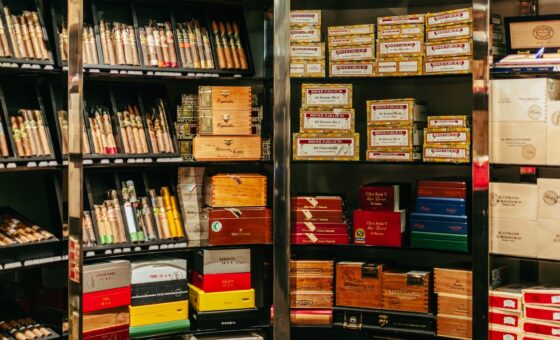
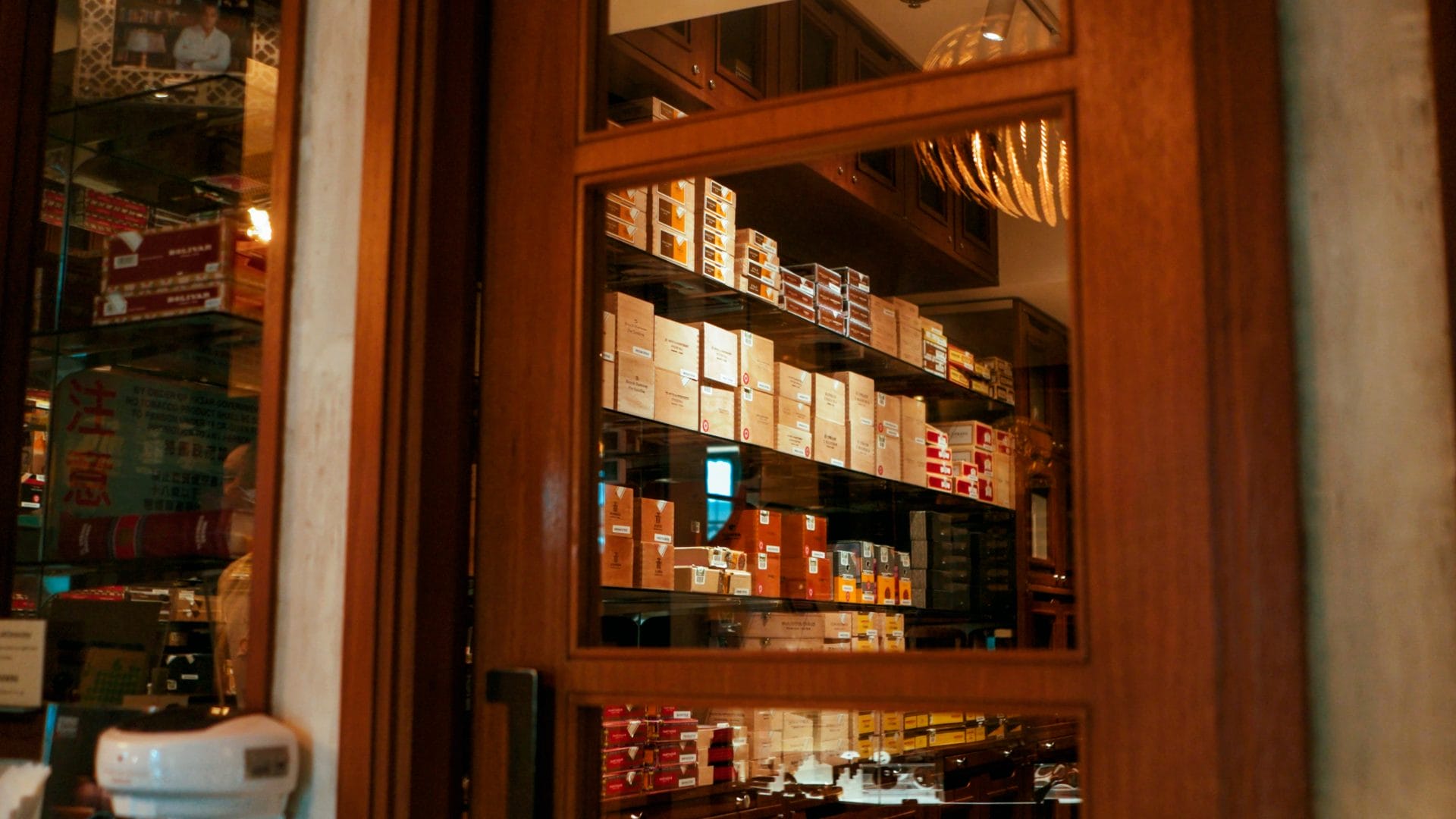
PCC is not only a distributor but also a retailer, operating around 40 locations across its territory, and that matters more than it might seem. Controlling a significant portion of the chain from import through to the point of sale means fewer opportunities for product to move through channels PCC cannot account for. It is another layer of the same system.

Nowhere is that more apparent than in the locker service available at most PCC locations. Customers can purchase cigars in store and place them directly into storage on site, kept under carefully controlled conditions. A box that goes from a PCC shelf into a PCC locker and never leaves builds a provenance that is almost impossible to replicate elsewhere. If a customer later wants to sell those cigars back to PCC, they can, and because the boxes never left PCC’s custody the entire time, PCC can sell them on as verified vintage stock.

The lounges serve another purpose too. In markets where anti-smoking legislation rules out advertising and promotions, they are one of the only places PCC can communicate with its customers. New releases, feedback, relationships, it all happens there because it cannot happen anywhere else.
Final Thoughts
What stands out after spending time with PCC is how much of the supply chain sits under one roof. Import, storage, quality inspection, NFC tagging, distribution, retail, and long-term ageing all happen within the same operation. In a region where counterfeit Cuban cigars have been a serious problem, this ability to trace your cigars from import to retail offers a kind of assurance that most customers in this industry have not had access to before.
Full interviews can be found in the video linked below: