Havana is Not Falling: Nine Days on the Ground in Cuba’s Crisis
Cuba has been operating under the longest-running embargo in modern history. The US embargo began in 1962 and since then the country has endured crisis after crisis. This latest one, however, has had commentators not just discussing hardship but predicting the end.
The most recent move against Cuba has been the oil blockade on Venezuela, cutting off what was the country’s most vital supply line. With fuel running dangerously low, many are speculating that Cuba will grind to a standstill and that the government may finally be forced to concede. Rumours have been circulating about just how bad conditions have become and how quickly the suffering has escalated.
To find out for ourselves, we spent nine days in Havana to see the reality on the ground.
The Postponed Festival

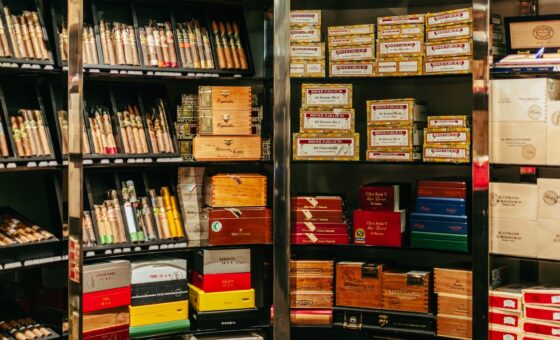
This year marks the 60th anniversary of Cuba’s flagship cigar brand, Cohiba. To celebrate, Habanos S.A. had planned to host the Festival del Habano here in Havana. Excitement for the event peaked in January, but after the US ran its operation in Venezuela to capture Maduro, the situation looked uncertain.
Initially there was some optimism. Speculators suggested that with so much at stake, Habanos would find a way to make it happen. The festival brings significant income to both the company and the country, and with tourism already in decline, pulling the plug on an event that draws visitors from all over the world would have been a critical blow, not just for the company but for ordinary citizens. Guest houses fill up, restaurants and bars see a surge in business, taxi drivers have steady work, and local vendors see their busiest stretch of the year.
Rumours began circulating about the festival being cancelled and claims were even made that the festival had been postponed already more than a month prior. This is false and nothing more than cynical scaremongering from certain publications and individuals. The reality was that Habanos and Tabacuba only sat down to discuss whether the festival would still go ahead on the 12th of February. It was on that day that they internally decided to postpone. The public announcement came on the 14th. Prior to this, everything was still moving forward without delay. Images circulated online showing workers still preparing the venue for the welcome evening as late as the 11th of February, and testimonies from several locals confirmed that preparations were continuing right up until the announcement.
There were also claims from some publications that the festival was called off because the overall situation in Havana made it inappropriate to hold a luxury event; this is also not true. It was postponed because the fuel shortage made it extremely difficult for people to actually get into the country safely. Flights from Canada were completely halted. Flights from other countries were at risk.
Having a large group of international visitors stranded in a country running out of fuel would have been a disaster for everyone involved. If the general state of Havana alone were enough to cancel, they would have postponed last year too, because the overall situation on the ground is broadly similar. There is very little difference between last year and this year aside from a few key factors, which we will cover in the rest of this article.
Nine Days in Havana

The first sign that something was different came before we even landed. The plane was noticeably emptier than in previous years. To put it into perspective, the majority of business class and premier economy was empty, and upgrades from economy to business, normally priced around £2,000, were going for just £314.
Arriving in Havana confirmed it. The queues through immigration were significantly shorter than usual. The time it took to collect bags and walk out of the airport wasn’t even long enough to enjoy the first third of a petit corona. In previous years I could comfortably smoke a full robusto waiting for my luggage to come through.
But walking through the airport and speaking with locals, it did not feel like a country on the verge of collapse. It felt about the same as previous years. There was some anger towards the US from certain locals, but aside from that the atmosphere was familiar.
Cars and Transport in Havana
 There has been a huge drop in the number of cars on the streets. You could walk comfortably down the middle of the road without any issues. The odd bike or car that did come through would simply drive around you. I did this deliberately, just to test how empty the roads actually were.

What has changed is not that people stopped moving. They changed how they move. The fuel shortage kicked in and the people of Havana reacted almost immediately. Electric vehicles have appeared on the roads in noticeable numbers along with a huge increase in bicycles, bicycle taxis and moped taxis. Speaking with locals, most described it the same way. It is not a problem for them. Living in Cuba means adapting, and this is just the latest thing to adapt to.

There are still a fair number of taxis available to book and drive around the city, but the shortage of cars on the road is obvious. Had the festival gone ahead, transport would have been a serious problem for visitors. Even the price of taxis has doubled and in some cases tripled since my last visit in September.

There is also a growing number of electric cars on the road, along with smaller electric vehicles that owners charge overnight. When we spoke with locals about how they get to and from work, some said they wait long hours for buses or try to hitch rides with passing cars. Others said they simply bought an electric bike so they could get to work without relying on fuel at all.

Local taxi apps such as La Nave operate relatively well during the day with cars generally available, however the cost is out of reach for many locals. Short distances of around a mile or two can cost up to $10 in some cases, although most of the journeys I took were no more than $5. At night it is a different situation entirely. After 11pm cars become extremely scarce. There are a few drivers on mopeds available and although they are much cheaper, it is not practical for groups. On more than one occasion we had to travel one by one on the back of a single moped from places like Bleco back to hotels and Airbnbs.

Several taxi drivers confirmed that they always plan for crises like these and build up their own private fuel reserves. This is generally only possible for taxi drivers because of the higher income they generate from driving tourists.
We visited auto shops in the city to get a sense of how the shortage was affecting business on the ground. One confirmed there had been no drop in demand for their services and that if anything there had been an increase in people coming in for parts and repairs. Another told a different story, saying they had been forced to pivot towards bikes and that car repairs had dropped off significantly over the previous couple of weeks.


It should be said that we are still in the early stages of this fuel shortage and the real impact may start hitting much harder further down the line. Having said that, the people of Havana seem prepared and are adapting remarkably quickly to changing circumstances. It is actually quite impressive how fast the city adjusts.
Power and Blackouts
The city does experience regular blackouts, but we experienced fewer during this trip than last year. Where you are in the city matters. If your apartment is near a hospital you will likely experience fewer or no blackouts, and further from the centre you may experience more. My apartment was near the Hotel Nacional de Cuba and during my stay I had a handful of blackouts lasting a few hours in the afternoon and several hours at night. Power was generally available during the day up to around 3pm and again between roughly 11pm and 5am.
Compared to my previous trip in February last year, I actually had more power this time around. Last year I almost never had power in the morning and it was generally only available in the evening or at night.

Restaurants, bars and hotels were a different story entirely. We experienced no power outages in any of them, including many popular independent locations across the city. The only exception was a single outage at a restaurant called MarAdentro, where a backup generator kicked on immediately. The hospitality side of the city ran without interruption.

It must be said clearly that this is specifically Havana. Other parts of the country have experienced significantly longer and more severe outages. Even within Havana the situation is unpredictable. Latest reports show the whole city went almost a full day without power just recently. This is not to say everything will be fine if you visit. It is very difficult to predict when an outage will occur or how long it will last, making it nearly impossible to plan anything requiring power without a backup generator. And walking up and down nine stories in an apartment building with the Havana sun beaming down is not a great experience.

Locals all had a similar perspective. There hasn’t been much change to the power situation compared with last year aside from that most recent citywide blackout. As one local put it, “it’s fine, we have sunshine.”
One thing worth noting is that when the power goes out in a particular area, mobile internet drops too. This can be remedied by walking to an area where there is still power, but it is worth knowing about.
Hotels we visited including the Kempinski, the Packard Hotel and the Hotel Nacional did not suffer any outages during my stay or during any of my previous trips. Staff confirmed that power outages for the hotels remain extremely rare despite the fuel situation.
The Immediate Danger
Havana is estimated to generate over 30,000 cubic meters of waste every day. The city has just over half the garbage trucks it needs and many of those are broken down. A significant portion of waste simply goes uncollected and stays on the streets. This is not new. It has been a problem since at least 1980 and it has only gotten worse.

Locals we spoke to were straightforward about it. The work doesn’t pay enough, so people don’t want to do it. Collection has deteriorated and the waste is piling up. The fuel shortage has made things worse because even the trucks that do work can’t always run, but the reality is that this was a serious problem long before the current crisis.
In a climate like Havana’s, uncollected waste is not just unpleasant. It is dangerous. Rotting garbage in heat and humidity creates breeding grounds for mosquitoes that carry highly infectious diseases. It attracts rats, cockroaches and flies, all of which carry disease. Stagnant water that collects around waste piles can become contaminated, further increase major health risks.

People can adapt to fewer cars. They can manage around power cuts. But you cannot adapt around decomposing waste piling up outside your home. This might be the more pressing threat Havana faces right now. Not because it is the root cause of the country’s problems, but because it is where the real harm to human health lands. The garbage crisis could very quickly become a public health emergency.

What’s on the Horizon
While the current situation dominates the headlines, several developments are taking shape that could impact Cuba’s near future.
A tanker called the Sea Horse, believed to be carrying roughly 200,000 barrels of Russian diesel, was tracked heading towards Cuba in late February with an expected arrival in early March. Russia has framed the shipment as humanitarian aid. If it reaches Cuba it would be the first confirmed fuel delivery since early January. It would not solve the fuel crisis but it would buy valuable time.
On the 25th of February the US Treasury Department issued a licence allowing companies to resell Venezuelan oil to Cuba’s private sector. The condition is that the fuel must be handled by private citizens and businesses, not the state. Operations involving the Cuban military, intelligence services or government entities are explicitly excluded. In effect, the US is attempting to route fuel into the country while bypassing the government entirely. Whether Cuba accepts oil on those terms remains to be seen, but the option now exists where weeks earlier there was only a total blockade.
The most significant development however is the proposed new Housing Law. A draft was put out for public consultation in February 2026, closing on the 28th, with the final text expected before the National Assembly by the end of this year. If passed, the changes would be substantial. Cubans who emigrate would no longer lose their property. Individuals could own up to two homes plus a vacation property. Mortgage financing would be introduced for the first time in Cuban legal history. Separately, the government is opening the door for foreign companies to fully lease and operate tourism properties, with the first deal already in effect as of January 2026 between Iberostar and a hotel in Varadero.
In Havana, people were already talking about what this could mean. Friends of mine in the city were looking at purchasing additional property to develop rental businesses. The prospect of foreign investment was generating genuine excitement among locals because of what it means practically. More investment means more tourism, more tourism means more income. Cuba currently has a housing deficit of over 900,000 homes with roughly 1.4 million properties in poor or fair condition. If these reforms pass and are genuinely implemented, the combination of mortgage financing, expanded ownership and foreign hotel investment could begin to unlock economic activity that has been frozen for decades.
None of this is guaranteed. The draft still has to pass the National Assembly. The embargo remains in place, limiting how much foreign capital can flow in. But for the first time in a long time, there are tangible developments on the table that could meaningfully change the trajectory of the country.
The Air in Havana is Cleaner

With fewer cars on the road the air in Havana is cleaner than it has been in years. Walking through the streets you breathe easier. It is an odd silver lining to a fuel crisis, but it is there and it sets the tone. There is a strange and almost paradoxical optimism in Havana right now. Not the kind built on hope that things will get better, but the kind built on the simple fact that people do not have time to dwell on what is going wrong.

The people of Havana are not sitting around worrying about geopolitics or oil blockades or what a senator in Washington said about their country this week. They have more immediate things to deal with. Getting to work, feeding their families, keeping their businesses running. The bigger picture problems simply do not register in the same way when your day is already full of smaller ones that need solving right now. As one local put it, “there’s no point in worrying, it’s ok.”

This is what became most apparent on this trip. There was no sense of doom in Havana. No collective despair. No feeling that the country was on the verge of something catastrophic. People went about their days as though it was just another morning, another afternoon, another evening. “Es Cuba” was the phrase we heard more than any other. It was said with a shrug, sometimes with a smile. The embargo has been a fact of life here for over sixty years. Many of the people we spoke to have lived under it their entire lives. As one local said, “the US put more embargo, but we carry on.”

Whatever is thrown at the people of Cuba, they always seem to find another way.
It would be dishonest to say that Havana is fine. It is not. The fuel shortage is real, the power cuts are real, and the economic pressure is mounting in ways that could get worse before they get better. There are developments on the horizon that offer genuine reason for cautious optimism, but there are a lot of ifs between now and then.
The Havana we found over nine days does not resemble the city being described in headlines and political speeches. This is not a city on the brink of collapse. It is a city dealing with a difficult situation the way it has always dealt with difficult situations. The coverage that has surrounded Cuba in recent months has often been sensationalised and poorly informed. The reality is more nuanced than that, more complex than that, and frankly more human than that.