Pairing Cigars & Alcohol – Laphroaig 10
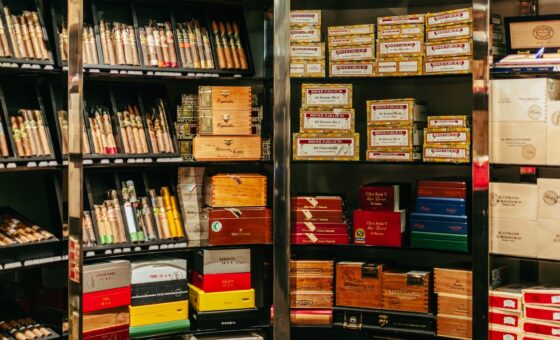
Cigars and fine liquor are a natural pairing, enhancing each other’s complexity and depth. Whether it’s a rich whisky, a smooth rum, or a refined cognac, the right drink can elevate the cigar experience, and vice versa. This synergy is so profound that some cigar brands take it a step further, aging their tobacco in liquor barrels to infuse their cigars with unique flavours.
Several iconic collaborations between cigar and liquor brands have emerged from this shared passion for craftsmanship. Maker’s Mark, for example, offers cigars housed in their signature wax-sealed tubes, while Drew Estate has partnered with Pappy Van Winkle and even crafted Kahlua-flavoured cigars in the past. General Cigars has teamed up with Sazerac, resulting in creations like Fireball cigars and Weller by Cohiba, alongside partnerships with Buffalo Trace. Diesel’s Whisky Row cigars, produced in collaboration with Rabbit Hole Distilleries, are another fine example of this harmonious relationship.
Cuban cigars have also embraced this trend, with Cohiba famously collaborating with Martell Cognac. In Europe, Dominique London, a luxury retailer, has gone even further by acquiring a distillery in Wales, producing their own whisky, gin, rum, and other liquors to pair with their cigars.
Pairing cigars with liquor creates a world of possibilities for the discerning connoisseur, allowing both the cigar and the spirit to shine through their complementary flavours. This rich tradition continues to inspire new partnerships and innovations, providing endless enjoyment for enthusiasts.
Laphroaig 10
Laphroaig distillery, pronounced /ləˈfrɔɪɡ/ (lə-FROYG), is a renowned producer of Islay single malt Scotch whisky, located in Port Ellen on the island of Islay, Scotland. The distillery is named after the land area at the head of Loch Laphroaig on Islay’s southern coast. While the exact meaning of “Laphroaig” is unclear, one popular theory suggests it derives from elements in Scottish Gaelic and Old Norse: “lag” (meaning “hollow”), “breidd” (meaning “breadth”), and “vík” (meaning “bay”), potentially indicating an original Gaelic form akin to “Lag Bhròdhaig,” or “the hollow of Broadbay.” A similar etymology might also connect the name to “Pròaig,” a place on Islay’s east coast, thought to mean “broad bay.”
Founded in 1815 by Donald and Alexander Johnston, members of Clan Donald who likely belonged to the MacIain of Ardnamurchan branch, the distillery has a rich history. The family, originally named MacIain, anglicized their surname to Johnston. The last Johnston family member to manage the distillery was Ian Hunter, the nephew of Sandy Johnston. Hunter, who passed away childless in 1954, left Laphroaig to his manager, Bessie Williamson.
Ownership of the distillery has changed hands multiple times. In the 1960s, it was sold to Long John International, a Scottish distiller. In 1973, Long John International, along with Laphroaig, was acquired by Whitbread. Later, in 1989, Whitbread sold the distillery, which became part of Allied Domecq. By 2005, Fortune Brands acquired Laphroaig as part of the Allied Domecq divestiture required for Pernod Ricard’s regulatory approval. In 2011, Fortune Brands reorganized, forming Beam Inc., which was subsequently purchased by Suntory Holdings in April 2014.
Laphroaig holds the unique distinction of being the only whisky to carry the Royal Warrant of the Prince of Wales, awarded during a personal visit to the distillery in 1994. In Scotland, the Prince of Wales is referred to by his title of Duke of Rothesay, which is how the distillery acknowledges him.
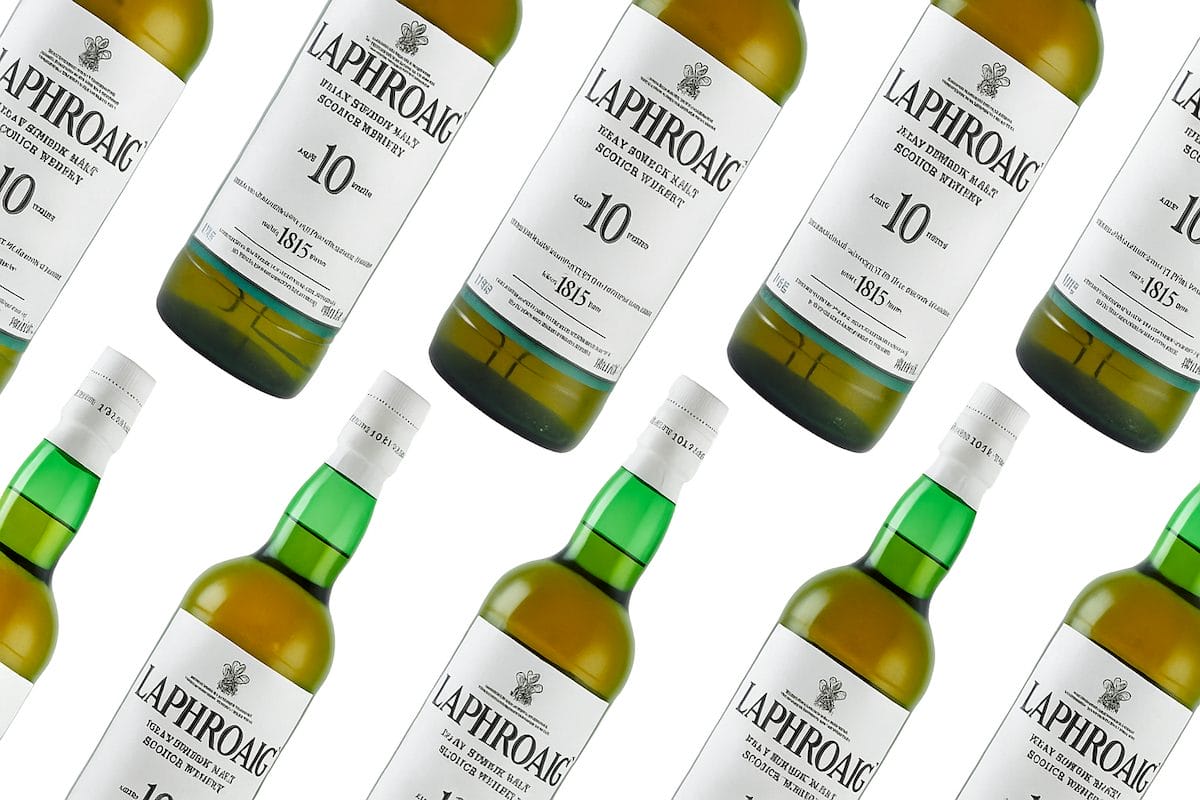
Laphroaig 10 is the definitive Islay peated single malt, distilled following traditions laid over the last 200 years by passionate master distillers. It’s a staple for connoisseurs and a peaty rite of passage. Its unique flavour profile is conjured from malted barley, which is first cold smoked over peat fires, like only a handful of distilleries.
The grain is then dried over those same fires and tossed on our malting floor facing out to sea. It spends the next 10 years in ex-Bourbon barrels. Because a full decade is what it takes to create our full-bodied 10-year-old whisky with bold smoky flavour, notes of salty seaweed, and a lingering sweetness. Sip neat or over ice. Either way, you’ll be drawn in by its quintessential Islay charm.
Neat
As always, I try the whisky first in a Glencairn glass. From the first sniff I know that this whisky and I won’t be friends. I smell medicinal peat, and I don’t like peated whiskies. The aroma is strong with also hints of iodine and seaweed over a salty and briny smoke. The very oily whisky tastes like peat, smoke and ash but with some sweetness from vanilla and honey and salty, briny notes. Without that peat flavour, it would be more approachable for me, but I know many people love this whisky. Pair it with a Connecticut Broadleaf cigar for some added sweetness. Something with body too to stand up against this powerful spirit.
In a rocks glass the nose is less strong, less pronounced. Now some subtle notes of citrus and honey can be smelled under the smoke and peat. The brine taste is a bit stronger; it even tastes a bit like olives. A strong cigar with a woody palate would be great to pair with this.
Old Fashioned
Normally the nose of an Old Fashioned is dominated by orange, but not with a peaty whisky like this. There is orange of course but covered in medicinal peat and smoke. The cocktail itself has a lot of peat and smoke, with some more sweetness than the neat version. The sweetness lost some of its vanilla flavour to the bitters. The bitters add depth. Any medium plus or stronger cigar will go well with this, anything milder than that will be overpowered. Which makes most of the Cuban cigars unfit, except for maybe Bolivar or Partagas. Look at a Davidoff Nicaragua, or many of the great cigars from Joya such as the Antaño 1970.
And now for the Old-Fashioned recipe:
1 sugar cube
3 dashes of bitters
2 oz or 60 ml of whisky
orange peel
Put the sugar cube in a highball glass, add the dashes of bitters and a splash of water. Muddle the sugar cube. Add ice and the whisky. Stir for 10 seconds, then add an orange peel.
Smoky Sour
Lucy Whitehall, Brand Ambassador at The Famous Grouse Experience in Perthshire, Scotland, suggests a smoky twist on the classic Whisky Sour using a blended Scotch. “It’s a great option for those who are just beginning to explore whisky cocktails, and it’s simple to make at home,” she explains. The Whisky Sour, which originated in the mid-1800s, has inspired numerous other classic drinks like the Sidecar and the Daiquiri. For a different take, try making the cocktail with Laphroaig 10 instead of Famous Grouse.
The nose is still dominated by the medicinal peat aroma, which completely overpowers the lemon. A quite unusual occurrence in a whisky sour not to have lemon dominate the nose. The lemon is dominant in the flavour though, but not overly dominant. It matches the peat, the smoke and the briny notes. It’s a great way of drinking this whisky when you’re not a fan of peaty whiskies. Pair this with a slightly spicy Cameroon wrapped cigar such as the Fuente Don Carlos, Oliva Serie O or the RoMa Craft Baka series.
And now for the Smoky Sour recipe:
2 ounces or 60ml of Smoky whisky
1 ounce or 30ml of Lemon Juice
½ ounce or 15ml of Simple Syrup
1 egg white
2 dashes of Angostura bitters
Combine all ingredients in a shaker without ice. Shake hard, add ice and shake until chilled, then strain into a rocks glass over fresh ice.