Tobacco in Australia: History, Market Dynamics, and Illicit Trade
Australia’s commercial tobacco cultivation ended in 2004 after government buy-outs. The country now relies entirely on imported leaf.
High taxes and excise rates have created a significant illicit market, shaping current tobacco consumption trends.
Overview & Historical Context
Tobacco arrived in Australia with the First Fleet in 1788.
British settlers brought pipe tobacco, snuff, and cigars to New South Wales.
By the late 19th century, small-scale estates in the Hunter Region and Northern Rivers supplied local cigarette manufacturers.
Local tobacco production catered to a growing domestic market within the colonies.
The decline of cultivation began in the mid-1990s. Governments offered exit grants to growers to cease production.
By 2004, all commercial cultivation ended, making Australia entirely dependent on imports for all tobacco products.
Key Tobacco Growing Regions
Historically, tobacco thrived in specific areas:
- New South Wales: Hunter Valley and Northern Rivers regions
- Queensland: Darling Downs
In 1889, New South Wales alone produced over 1.6 million pounds annually.
Today, no active commercial regions exist. Land formerly used for tobacco has been repurposed or lies fallow.
All Australian tobacco products, including premium cigars, come from international suppliers.
Main Tobacco Types & Characteristics
During cultivation, Australia focused on Virginia, Burley, and Oriental varieties.
Virginia
Virginia tobacco was flue-cured using indirect heat over five to seven days. This produced a bright, sweet, and aromatic leaf.
Burley
Burley underwent air-curing in ventilated barns for several weeks. It has lower sugar, higher nicotine, and a darker leaf.
Oriental
Oriental tobacco (Nicotiana tabacum var. orientalis) was sun-cured on racks. This gave the leaf a unique, often spicy or floral aroma.
These varieties defined the domestic industry. Their cultivation and curing adapted to local climates and market demands.
With cultivation ended, Australia now relies on imported leaf for all tobacco products.
Production System & Regulation
The cessation of tobacco farming was managed through government-funded exit grants.
These grants compensated growers and dismantled domestic production.
Australia’s regulatory framework now focuses on taxation and import control.
The Australian Taxation Office (ATO) applies excise duty on all tobacco goods, indexed twice yearly.
Excise has increased by 5% annually from 2023 through 2025.
Licensing for processing or manufacturing excisable goods remains under ATO oversight, even with imported leaf.
This ensures legal compliance but struggles to fully prevent illicit trade.
Role in Global Trade
Australia no longer produces tobacco and is purely an import market.
The country relies on imported leaf for all cigarettes and cigars.
High excise duties make tobacco among the most expensive globally.
This creates incentives for illicit trade, bypassing taxes and regulations.
For premium cigars, all wrappers, binders, and fillers must come from Central America or the Caribbean.
Quality and availability depend heavily on legal import channels.
Cigar-Specific Market Features
Australia produces no cigar-grade leaf.
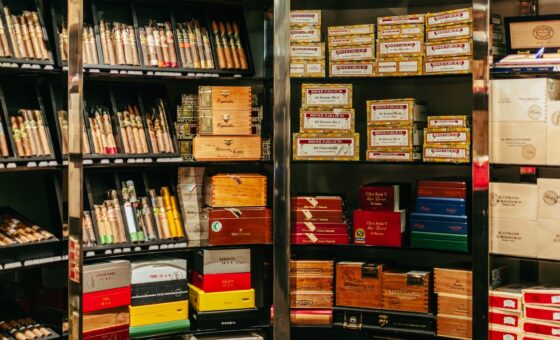
All premium cigars sold domestically are imported, reflecting the absence of local production.
High excise rates push up prices, creating a robust but challenging market for authentic products.
Illicit cigars and counterfeit products pose risks for consumers seeking genuine, high-quality cigars.
Reputable retailers are essential to ensure authenticity.
Current Challenges & Future Outlook
High excise rates have fuelled a growing illicit tobacco market.
Tobacco excise revenue fell from AUD 16.3 billion in 2020 to AUD 7 billion in 2024, showing the market impact.
Illicit products now account for roughly 23% of tobacco consumption in some states.
Australia has no plans to revive domestic cultivation.
The government continues to focus on controlling imports, combating illicit trade, and maintaining high excise rates.
For consumers, this means high prices and a constant need to ensure product authenticity.
Fast Facts Table
| Metric | Data |
| Land devoted to tobacco (2022) | 0 ha (0.00% of agricultural land) |
| Commercial production ceased | 2004 |
| Tobacco excise revenue (2020) | AUD 16.3 billion |
| Tobacco excise revenue (2024) | AUD 7 billion |