Patina y Viso Leprechaun Dust Ships Ahead of St. Patrick’s Day
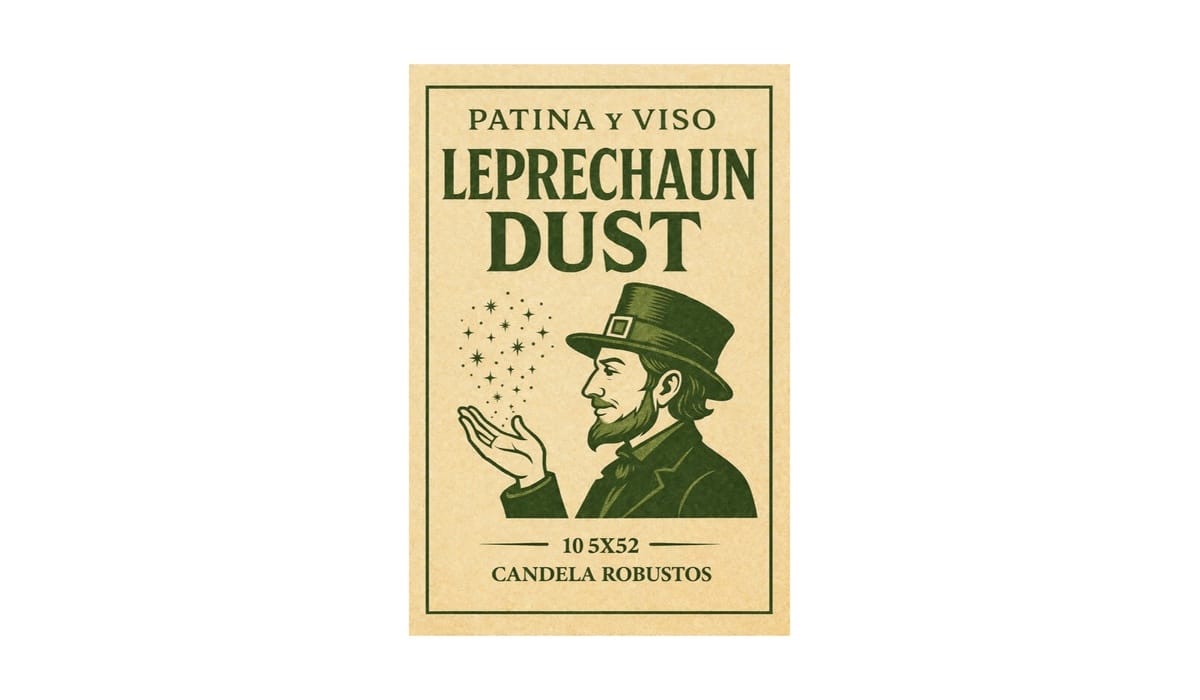
Patina Cigars and Viso Horny continue their creative partnership with Leprechaun Dust, a limited green-wrapped cigar. The release is scheduled to ship next month, timed deliberately ahead of St. Patrick’s Day.

A Green Collaboration Continues
Patina Cigars teams up once again with Viso Horny. The project follows last year’s Verdigris. That cigar also came from the same factory and shared a limited concept.
Mo Maali of Patina Cigars and Tyler Jeffery of Viso Horny drive this collaboration. Both brands focus on small-batch projects. Leprechaun Dust fits that philosophy perfectly.
Blend, Size, and Factory
Robusto Extra Format
Leprechaun Dust measures 5 x 52. The format qualifies as a robusto extra. The size aims to balance wrapper influence with filler complexity.
Candela Wrapper Explained
The cigar uses an Ecuadorian candela wrapper. Candela gives the cigar its green appearance. The wrapper sits over binder and fillers grown by Oliva Tobacco Co.
Candela is not a tobacco varietal. It refers to a curing process. Tobacco leaves undergo accelerated heating in specialised barns. The process removes moisture quickly. Chlorophyll remains in the leaf, which preserves the green colour.
Some candela wrappers look bright green. Others appear tan with a green hue. Colour variation depends on processing and leaf texture.
Nicaraguan Production
The cigars are made at Nicaragua American Cigars S.A. in Estelí. The factory handled last year’s Verdigris as well. NACSA continues to attract brands seeking precision and consistency.
Pricing and Availability
Each cigar carries an MSRP of $12.50. Production is limited to 200 bundles. Each bundle contains ten cigars. Total output reaches just 2,000 cigars.
Patina and Viso plan to ship the cigars next month. The timing aligns with seasonal interest in candela cigars.
Candela’s Place in Cigar History
From Mainstream to Novelty
Decades ago, candela dominated the U.S. market. Many smokers preferred its mild profile. Over time, tastes shifted toward darker wrappers.
Today, candela appears mostly as a seasonal or novelty option. Despite that, it offers advantages to growers and manufacturers.
Speed and Efficiency
Candela curing takes less than a week. Traditional curing can take months. Faster processing reduces storage demands. It also allows quicker turnaround for limited releases.
That efficiency makes candela ideal for small projects like Leprechaun Dust.